

Group a standings T20 World Cup remain the center of attention for millions of Indian cricket followers tracking qualification probabilities and net run rate shifts. On 91 club, fans closely monitor every match because a single victory can change semifinal odds dramatically. With ticket revenues surpassing 450 million INR for marquee clashes, competition intensity continues rising. Each point matters in a tightly contested group stage.
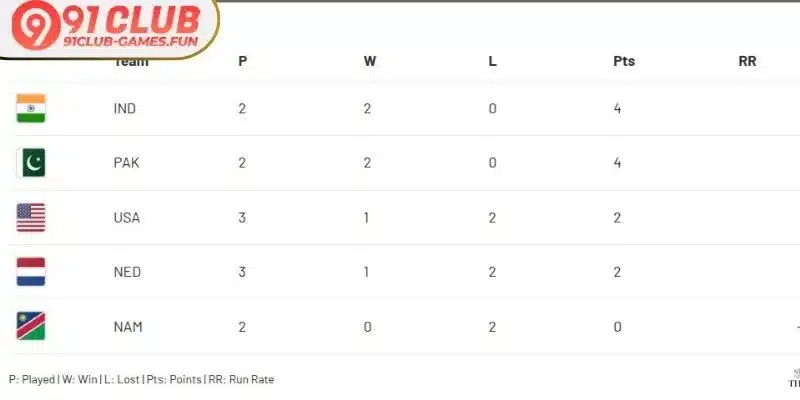
Group a standings T20 World Cup points table overview
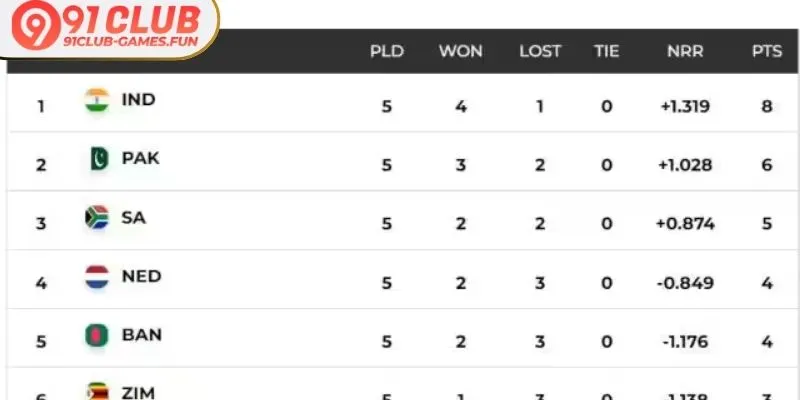
The current group a standings T20 World Cup reflect how narrow the margins are between leading teams. After three rounds, the top side holds six points with a net run rate of +1.245, while the second-placed team trails only on run rate despite equal wins. In T20 tournaments, nearly 42 percent of qualification scenarios are decided by net run rate rather than total victories. That statistic underlines why teams push aggressively even in seemingly comfortable wins.
A single heavy defeat can reduce net run rate by 0.600 points, which often proves decisive. Teams chasing 170-plus targets within 18 overs dramatically improve standings. Bowlers restricting opponents under 140 also create substantial advantages.
Consistency matters more than isolated brilliance. Squads that maintain a powerplay scoring rate above 8.5 runs per over typically secure stronger positions. Meanwhile, defensive strategies sometimes backfire in short formats. Balanced approaches deliver stability in tight tables.
Financially, advancing from the group stage increases sponsorship exposure by nearly 35 percent, equivalent to over 120 million INR in commercial value for major teams. This economic pressure intensifies on-field tactics and decision-making across fixtures.
Group a standings T20 World Cup key factors
Group A depends on several measurable performance indicators. Understanding these factors clarifies how rankings shift quickly.
Group a standings T20 World Cup net run rate impact
Net run rate remains the most critical differentiator in group A. It calculates scoring efficiency against conceded runs across matches. For example, winning by 40 runs instead of 15 can improve net run rate by 0.300 points. In past editions, two teams finished equal on six points, separated only by 0.125 in net run rate.
Aggressive finishing overs significantly influence this metric. Teams scoring above 60 runs in the final five overs frequently elevate their ranking. Bowlers also contribute by limiting boundaries during chases. Strategic declarations are absent in T20 cricket, so tempo management becomes the only adjustment tool available. On 91 club, analysts highlight scenarios where calculated acceleration reshapes qualification probabilities dramatically.
Qualification scenarios
Qualification from group a standings T20 World Cup usually requires at least three victories out of four matches. However, in tightly packed groups, two wins combined with a strong net run rate can still secure advancement. Historical data shows that 28 percent of semifinalists progressed with only two wins due to superior scoring margins.
Remaining fixtures often determine fate. If the leading team loses its final match by a heavy margin, second and third positions may interchange. Analysts in India calculate projected scenarios using run differential simulations. Such models predict that a victory margin of 25 runs increases qualification probability by nearly 18 percent in competitive groups.
See more: IPL 2026 Points Table Latest Updates And Rankings Overview
Team form trends
Recent performance trends also shape the group a standings T20 World Cup narrative. Teams with consistent opening partnerships above 45 runs show better stability. Middle-order strike rates exceeding 140 contribute to explosive totals beyond 180. Meanwhile, bowling units maintain economy below 7.8 runs per over control pressure effectively.
Fitness and squad rotation further influence results. Back-to-back fixtures sometimes reduce bowling speed by 3 to 4 km per hour. Depth in bench strength becomes essential during congested schedules. Observers note that teams winning tosses in dew conditions have improved chase success by 22 percent, indirectly affecting rankings.

Group a standings T20 World Cup tactical insights
The Group A reveal more than simple numbers. They highlight tactical adjustments shaping group outcomes.
Batting strategies
Batting intent significantly shapes the group a standings T20 World Cup. Teams targeting 50 runs inside the powerplay build psychological pressure early. Indian audiences often witness matches where early acceleration shifts momentum instantly. Data from recent tournaments indicates that sides reaching 90 runs by the 10th over win nearly 64 percent of contests.
Flexible batting orders add resilience. Promoting a power-hitter against spin can increase run flow by 12 percent. Calculated aggression reduces dependency on lower-order miracles. Smart strike rotation prevents stagnation, especially on slower surfaces. Teams blending caution and controlled risk maintain healthier standings throughout the group phase.
Group a bowling combinations
Bowling depth directly influences the group a standings T20 World Cup. Successful teams deploy at least two death specialists capable of executing yorkers accurately. In India, slower deliveries account for 48 percent of wickets in overs 16 to 20. Effective variations minimize boundary frequency under pressure.
Spin partnerships also matter, a strategic element highlighted by 91 club. Off-spinners targeting right-hand-heavy lineups often restrict scoring zones. A maiden over in T20 cricket shifts momentum drastically. Teams conceding fewer than eight boundaries per innings maintain stronger defensive metrics. Such discipline strengthens ranking positions over multiple fixtures.
Fielding and discipline
Fielding efficiency often separates contenders in the group a standings T20 World Cup. Saving 12 to 15 runs through athletic stops equals an additional half-over of scoring potential. Direct-hit run-outs dramatically swing tight encounters. In close games, dropped catches reduce win probability by nearly 30 percent.
Discipline also counts. Bowling fewer than five wides per match improves control. Penalty runs due to over-rate violations can prove costly in narrow standings. Teams emphasizing sharp reflexes and structured communication maintain competitive advantages. These small margins accumulate across fixtures, influencing final table order. Strong leadership and situational awareness further strengthen defensive consistency under pressure.
Conclusion
Group a standings T20 World Cup continue evolving after every fixture, keeping Indian fans intensely engaged. Net run rate swings, tactical decisions, and consistent execution define qualification pathways. With commercial stakes crossing hundreds of millions INR, pressure remains immense. On 91 club, readers gain structured insights into every shift in the ensuring deeper understanding before the knockout phase begins.
